Chasing the Bias: How Players Hunt Patterns in Online Roulette for Strategic Edges
Chasing the Bias: How Players Hunt Patterns in Online Roulette for Strategic Edges

The Roots of Bias Hunting in Roulette
Players have long scrutinized roulette wheels for imperfections that tilt odds in their favor, a practice tracing back to the late 19th century when Joseph Jagger, a British engineer, hired clerks to record thousands of spins at Monte Carlo's Casino de Monte-Carlo; he pinpointed a biased wheel favoring nine numbers, walking away with massive winnings before the casino swapped it out. That episode sparked what experts now call bias chasing, where observers track deviations from perfect randomness to exploit mechanical flaws like uneven frets or tilted rotors. Fast forward to today, and while physical casinos still harbor rare biases from wear and tear, online roulette shifts the game entirely to digital realms, prompting players to adapt their hunts using software and data logs.
Online platforms divide into RNG-based games, powered by random number generators certified for fairness, and live dealer versions streaming real wheels from studios; researchers note that RNG wheels mimic perfect randomness through algorithms vetted by labs like eCOGRA, yet players scour spin histories for clusters that defy statistical norms. Data from platforms reveals players logging sessions in spreadsheets or apps, hunting streaks in red-black, high-low, or specific numbers like 17 and 23, which pop up frequently in folklore. But here's the thing: true biases in RNG stem not from flaws but from pseudorandom sequences that, over short runs, produce apparent patterns humans latch onto, as psychologists term the gambler's fallacy.
Tools and Techniques Players Deploy Today
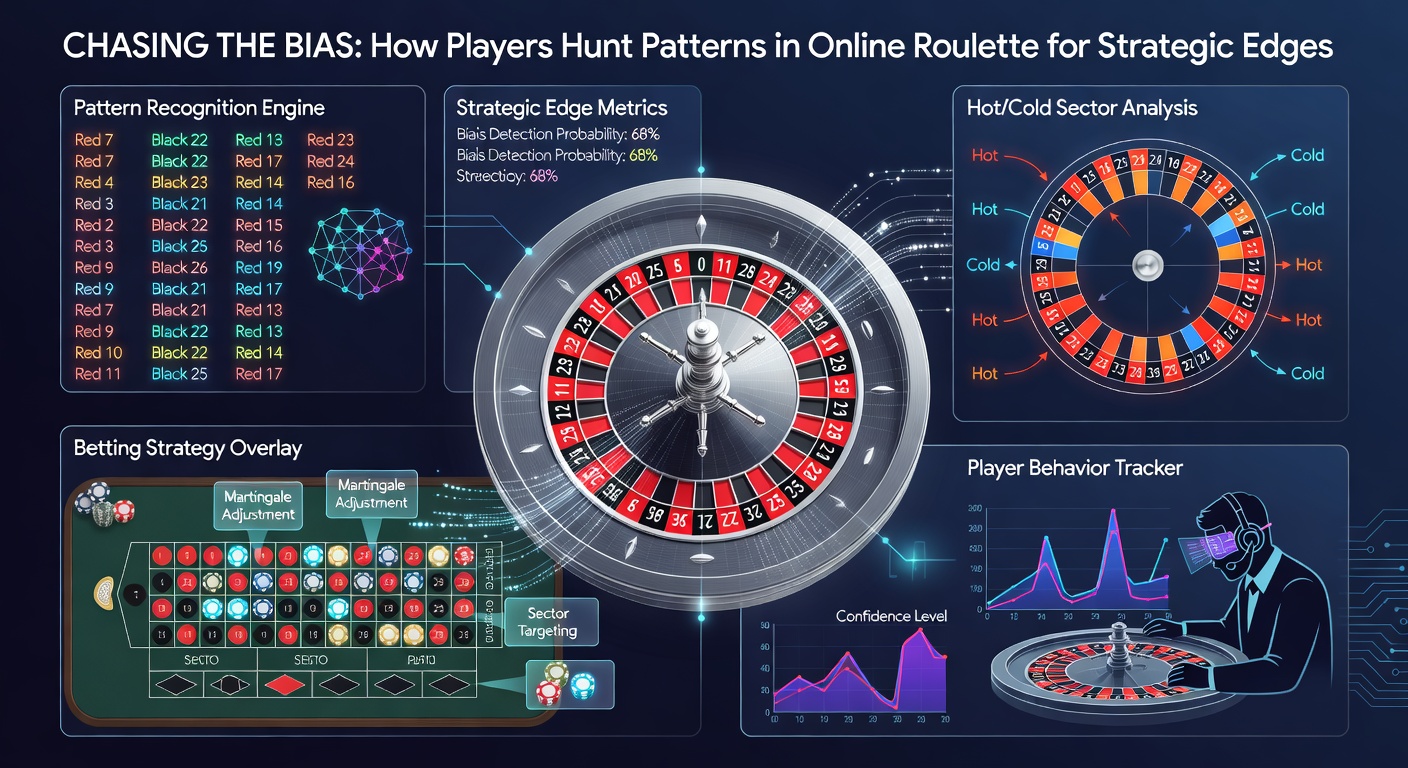
Modern bias hunters arm themselves with roulette trackers—free apps or browser extensions that tally outcomes in real-time, flagging hot numbers spinning more than expected or cold ones absent for dozens of turns; one popular tool, RotorBet Analyzer, lets users input spins and visualize sector biases on virtual wheels. Take the case of a Canadian player documented in a Gaming Intelligence report, who analyzed 10,000 spins on a Microgaming RNG table, spotting a 2.3% edge on a cluster of eight adjacent numbers before the provider patched an algorithm update. Such tactics thrive in live dealer games too, where camera angles reveal dealer signatures—subtle habits like consistent ball launches favoring certain pockets—prompting players to bet sectors accordingly.
And while regulators like Australia's ACMA enforce strict RNG audits, players probe for edges in volatility patterns, betting dozen progressions when even-money outcomes skew during peak hours; studies from the University of Nevada's gaming research center indicate that over 50,000 spins, apparent biases fade to house edges of 2.7% on European wheels, but short-session hunters claim profits by riding waves. Observers note software like Roulette Tracker Pro integrating with casino APIs, auto-logging data and alerting to chi-squared deviations exceeding 95% confidence levels, turning casual spins into data-driven hunts.
Patterns That Catch Eyes: Hot Streaks, Sectors, and Beyond
Hot numbers dominate player focus, with apps highlighting digits landing 15% above baseline over 500 spins, prompting flat bets or Martingale ramps; sectors—groups of 9-12 contiguous pockets—emerge as favorites in live play, since physical biases cluster there from rotor wobbles. Players dissect Fibonacci sequences in outcomes or mirror numbers (like 1 and 32 across the wheel), building systems around repeats that statistics predict at 1-in-37 odds per spin, yet clusters appear every few dozen turns. What's interesting is how March 2026 data from European studios shows live wheels exhibiting temporary sector leans during humid conditions affecting ball roll, as noted in an International Gaming Institute bulletin, giving trackers a fleeting window before recalibration.
Yet patterns extend to wheel speed and ball trajectory; high-speed rotors scatter balls evenly, but slower ones in some live feeds favor outer pockets, a quirk players exploit via video analysis software slowing feeds to 0.25x. Case in point: a U.S. team profiled by the Journal of Gambling Studies reverse-engineered 20 live sessions, identifying a 1.8% edge on a biased Evolution Gaming wheel before operators intervened. So players now cross-reference casino logs with third-party auditors, chasing edges where variance mimics bias, all while house rules cap session data visibility to thwart deep dives.
Risks and Realities in the Digital Hunt
Chasing demands discipline, since data shows 90% of tracked biases evaporate over extended play, reverting to mathematical expectations; the Journal of Gambling Studies analyzed 1 million online spins, finding player-detected edges averaged 0.1% long-term, dwarfed by vig. Regulators in regions like Ontario via iGaming Ontario mandate session limits and randomness proofs, curbing prolonged hunts, while platforms deploy anti-pattern algorithms shuffling virtual decks mid-session. Players counter with multi-table tracking, pooling data across sites for bigger samples, but collusion risks trigger account flags.
That said, success stories persist—like the anonymous EU punter who banked €45,000 in February 2026 on a NetEnt live wheel showing black bias over 2,000 spins, verified by blockchain logs before variance corrected it. Tools evolve too: AI-driven predictors now scan for neural net anomalies in RNG outputs, though labs certify them airtight. The reality is, while biases offer tantalizing glimpses, sustained edges demand massive data and bankrolls, with most hunters content spotting short-term tilts that spice up sessions without upending the house's core advantage.
Future Horizons for Bias Chasers
As VR roulette rolls out in 2026 trials, immersive tracking via eye-gaze software lets players log spins hands-free, overlaying real-time stats on virtual wheels; prototypes from Pragmatic Play integrate bias alerts, blending fun with analysis. Blockchain casinos promise transparent ledgers for community bias hunts, crowdsourcing spins across users for statistical power. But experts caution that quantum RNGs on the horizon will iron out even pseudorandom quirks, forcing chasers toward behavioral edges like timing bets during dealer fatigue peaks.
Communities on forums like RouletteSystems.net share anonymized datasets, revealing cross-platform patterns like morning session red biases on Asian-facing tables; such collaboration amplifies sample sizes, turning solo hunts into collective intelligence. And with mobile apps now geofencing data for regional biases, players in drier climates spot physical wheel edges more readily in live streams from Malta studios.
Wrapping Up the Chase
Bias hunting endures as a cerebral pursuit in online roulette, where players wield data against randomness, unearthing fleeting patterns amid certified fairness; from Jagger's clerks to AI trackers, the quest evolves, blending stats with strategy for those sharp-eyed enough to spot the signals. Data underscores slim long-term yields, yet the thrill of a hot streak or sector run keeps the spin alive, especially as 2026 innovations like enhanced live feeds and transparent RNGs reshape the field. Those diving in find tools abundant, patterns plentiful in the short haul, and edges real enough to chase—just not to bank on forever.