European Oversight Mechanisms Guide Browser Wheel Variant Rollouts Through Compliance Reviews
Written by Frankie Ludwig · Aug 17, 2026

European Oversight Mechanisms Guide Browser Wheel Variant Rollouts Through Compliance Reviews
Regulatory audits conducted by national authorities across the European Union have direct effects on the selection of wheel simulation variants that operators can offer through browser platforms, and these reviews focus on technical standards, fairness protocols, and market access rules that differ by member state. Data compiled by the European Commission shows that audits completed in the first half of 2026 led several platforms to adjust their available simulations before full rollout, while operators in multiple jurisdictions reported delays when documentation failed to meet updated testing criteria.
National Frameworks Set Distinct Requirements
Each European country maintains its own licensing body that performs or commissions audits on browser-based wheel simulations, and these bodies apply criteria that reflect local gambling legislation alongside broader EU directives on consumer protection and digital services. In Germany the Gauselmann Group and similar operators must submit RNG documentation to the Gemeinsame Glücksspielbehörde der Länder, whereas Malta applies standards through the Malta Gaming Authority that emphasize server-side verification and continuous monitoring, and the Netherlands relies on the Kansspelautoriteit to certify variants before they reach browser users. Observers note that these separate processes create staggered release schedules, since a variant cleared in one market often requires additional testing before appearing elsewhere.
Audit Procedures Examine Technical and Fairness Elements
Auditors review source code, random number generators, and payout tables during on-site and remote examinations, and they check that browser versions match the certified desktop or mobile builds. When discrepancies appear between the submitted documentation and the live product, authorities typically require operators to remove or modify the affected variants. Research from the University of Malta’s gaming technology unit indicates that audit cycles in 2025 and early 2026 averaged between six and nine weeks, with browser-specific tests covering latency, rendering consistency across devices, and resistance to manipulation attempts. Those who have tracked compliance trends report that simulation variants featuring advanced neighbor betting layouts or multi-wheel formats encounter longer review periods because auditors must validate additional mathematical models.
Impact on Variant Availability in Practice
Platforms that rely on browser delivery face particular constraints because updates must propagate without client-side downloads, and any regulatory change can force immediate removal of non-compliant variants. In August 2026 several operators adjusted their catalogues after the French regulatory authority ARJEL completed a targeted review of wheel simulations offered to French IP addresses, and similar adjustments occurred when Swedish and Danish authorities aligned their technical standards with updated EU digital single market guidelines. Data released by the European Gaming and Betting Association shows that the number of certified browser wheel variants available to users in the five largest EU markets declined by approximately 12 percent between January and August 2026, while the total number of licensed operators remained stable. These figures reveal that audits influence content selection more than overall market participation.
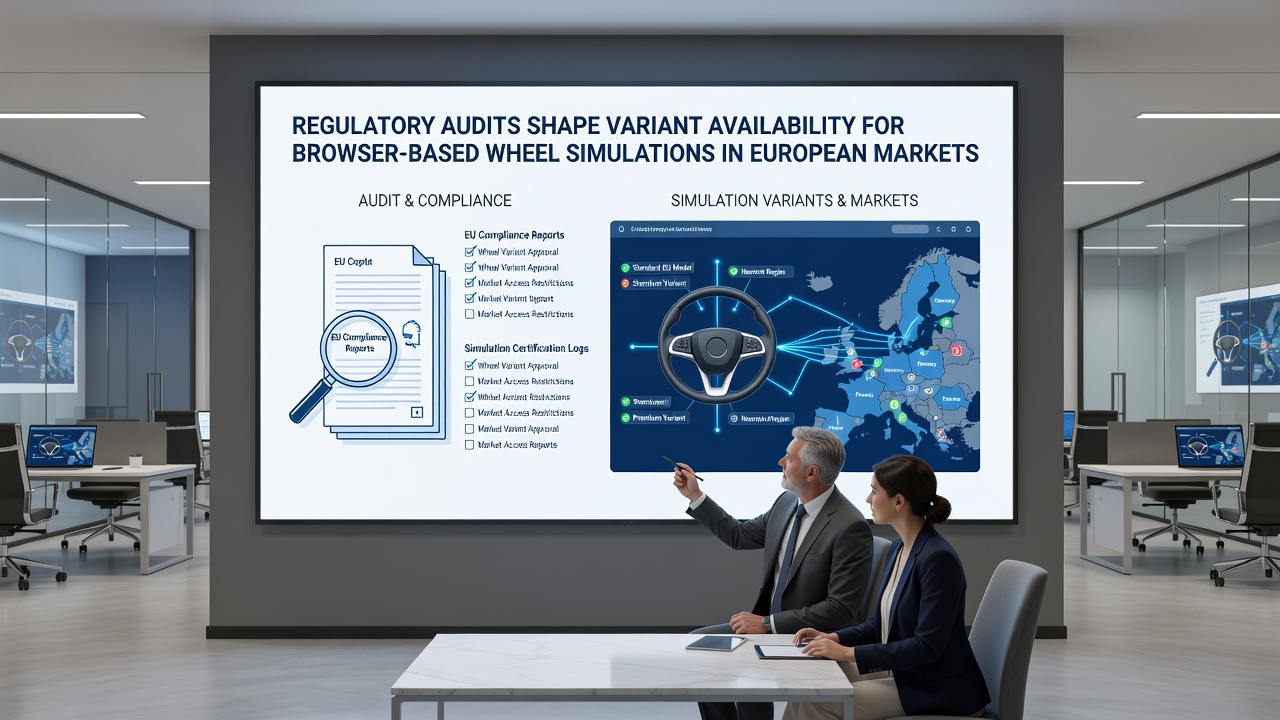
Operators often maintain parallel sets of variants, one for each major regulatory zone, and they activate or deactivate specific options based on real-time geolocation checks. This approach allows a single platform to serve multiple markets without violating any single set of rules, yet it increases development overhead because each variant must pass independent certification. Case examples from 2026 demonstrate that providers who pre-certify variants across several jurisdictions reduce launch delays when new audit requirements emerge.
Cross-Border Recognition and Remaining Barriers
Although the EU has explored mutual recognition of gaming certifications, most member states continue to require local audits for browser-based products, and this duplication extends the time between development and public availability. Industry reports indicate that companies seeking pan-European coverage allocate significant resources to parallel compliance teams, while smaller developers focus on one or two markets where audit timelines are more predictable. The reality is that technical harmonization remains partial, with differences in logging formats, payout verification intervals, and responsible gaming integration still requiring separate submissions.
Conclusion
Regulatory audits therefore function as gatekeepers that shape which wheel simulation variants reach browser users across European markets, and the pattern observed through mid-2026 suggests continued fragmentation rather than convergence. Authorities maintain these controls to enforce fairness and consumer safeguards, while operators adapt by structuring their offerings around the most current compliance outcomes in each jurisdiction. As testing methodologies evolve and new technical standards appear, the availability of specific variants will continue to reflect the outcomes of these ongoing review processes.