Global Oversight Frameworks Governing Random Number Generator Certification for Mobile Roulette Variants
Written by Blake Lorenz · Aug 6, 2026
Global Oversight Frameworks Governing Random Number Generator Certification for Mobile Roulette Variants
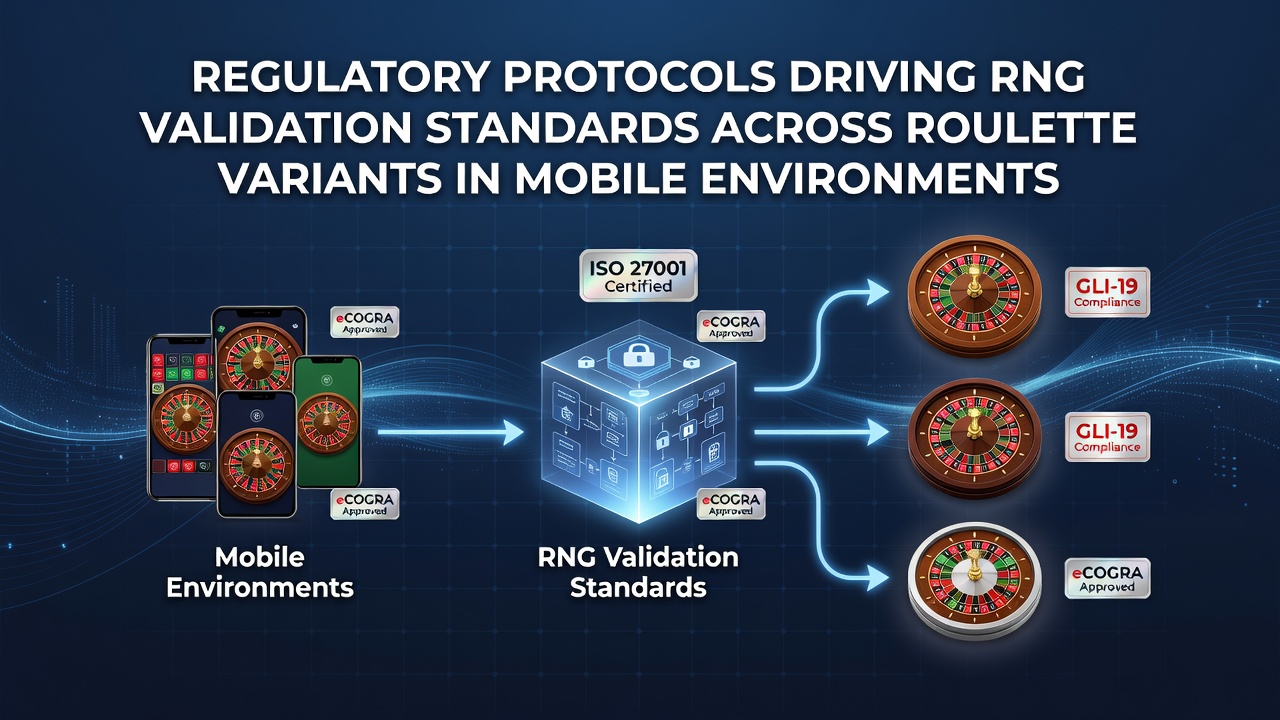
Regulatory bodies across multiple jurisdictions maintain detailed protocols that dictate how random number generators undergo testing and certification before deployment in mobile roulette applications, and these rules apply uniformly to European, American, and French wheel variants delivered through smartphone interfaces. Standards require independent laboratories to evaluate sequence unpredictability, return-to-player percentages, and resistance to predictive manipulation across all game types, while mobile-specific considerations address network latency, device variability, and software integrity during live spins.
Core Validation Requirements Across Roulette Formats
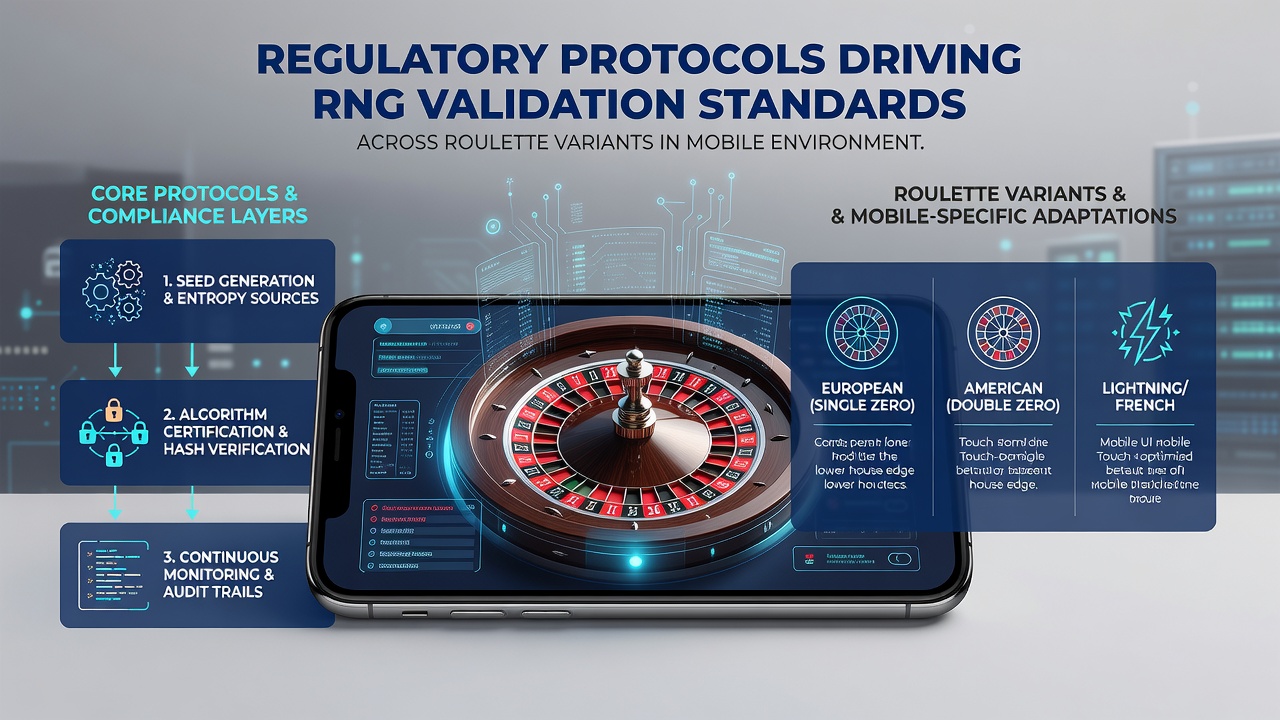
Certification processes begin with statistical analysis of millions of generated outcomes, where laboratories verify that each roulette variant produces results consistent with its mathematical model, and this includes confirming that zero pockets and number distributions remain unaltered by mobile operating systems or hardware differences. European roulette, which features a single zero, demands separate validation from American versions that incorporate both zero and double zero, yet the underlying RNG algorithms must demonstrate equivalent randomness properties under identical testing conditions.
Testing extends to mobile environments because operating system updates, screen resolution changes, and touch input handling can introduce unintended biases if not properly isolated during evaluation. Observers note that protocols now mandate simulation of real-world mobile conditions, including fluctuating signal strength and background application interference, to ensure consistent performance regardless of player location or device model.
Testing Methodologies and Laboratory Standards
Approved testing facilities apply a combination of diehard, NIST, and custom statistical suites to RNG outputs, and these suites examine long-term distribution, short-term clustering, and autocorrelation patterns that might appear in mobile roulette sessions. Since August 2026 several international frameworks have aligned their minimum sample sizes for mobile testing, requiring at least 100 million spins per variant before granting certification, which has streamlined cross-border approvals for operators serving multiple regions.
Researchers at institutions focused on computational mathematics have contributed updated test batteries that better detect subtle hardware-based anomalies common in mobile chipsets, and these enhancements help regulators maintain confidence that virtual wheels behave identically to their physical counterparts. Data from certification reports indicate that mobile-specific RNG implementations now undergo additional entropy source verification to confirm that device sensors or external timing data do not compromise randomness quality.
Regional Regulatory Alignment and Mobile-Specific Rules
Jurisdictions outside the United Kingdom coordinate through organizations such as the Gaming Standards Association to harmonize RNG requirements for mobile platforms, and this collaboration reduces duplication while preserving local oversight on player protection measures. Australian and Canadian regulators have adopted similar mobile testing guidelines that emphasize real-time monitoring capabilities, allowing authorities to request fresh statistical samples from live systems without interrupting service.
Protocols also address how roulette variants are presented on smaller screens, ensuring that visual representations of the wheel and betting layout do not influence perceived randomness or player decision patterns. Separate certification tracks exist for live dealer streams versus fully RNG-driven games, although both must satisfy the same core statistical benchmarks when digital elements determine outcomes.
Continuous Compliance and Audit Procedures
Once certified, mobile roulette RNG systems remain subject to ongoing audits, and operators must submit periodic reports demonstrating that deployed algorithms continue to meet original standards after software updates or server migrations. Regulators in several markets now require automated logging of every spin outcome so that independent reviewers can reconstruct sessions and verify compliance at any point in the game lifecycle.
These audit trails support investigations into suspected irregularities and provide evidence that mobile delivery mechanisms have not introduced systematic deviations across different roulette variants. Industry reports compiled by the European Gaming and Betting Association show that the frequency of post-certification audits has increased since 2025, reflecting greater emphasis on sustained integrity in portable gaming environments.
Conclusion
Regulatory protocols continue to evolve in response to technological advances in mobile hardware and software, and these changes ensure that RNG validation standards remain robust across all roulette variants regardless of delivery platform. Coordinated efforts among laboratories, standards organizations, and regional authorities support consistent fairness verification while accommodating the unique demands of smartphone-based play. As mobile adoption grows, the frameworks established through 2026 provide a foundation for maintaining player trust through transparent and repeatable testing processes.