La Partage and Surrender: Shielding Strategies in Live Dealer Roulette's High-Stakes Arena
La Partage and Surrender: Shielding Strategies in Live Dealer Roulette's High-Stakes Arena
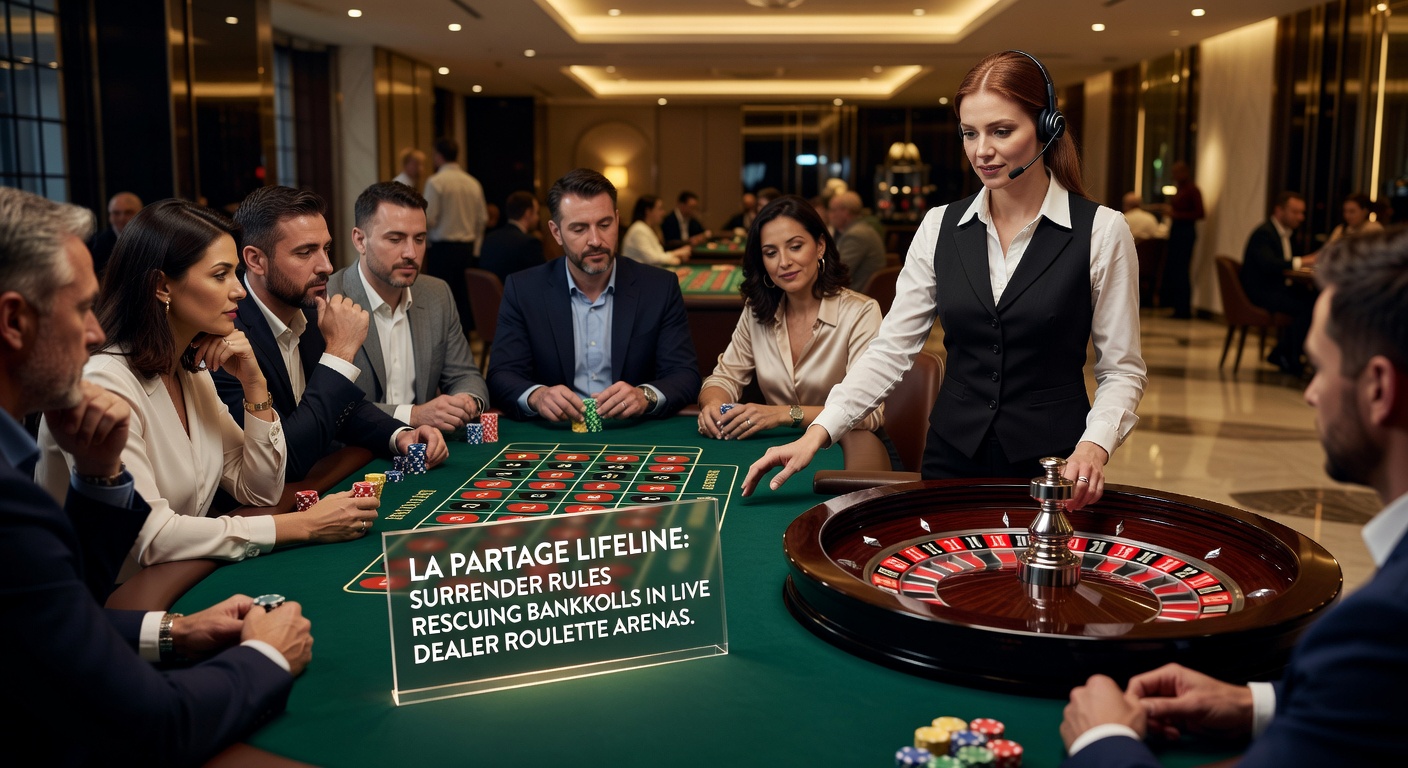
Unpacking the Rules That Flip the Odds
Live dealer roulette tables buzz with action as croupiers spin wheels under high-definition cameras, yet certain rules quietly shift the balance toward players on even-money wagers like red/black, odd/even, or high/low; La Partage and Surrender stand out here, mechanisms designed to reclaim half the stake—or more—when zero disrupts those bets, effectively halving the house edge from the standard 2.7 percent in European variants to a player-friendly 1.35 percent.
Experts trace La Partage back to French casinos in the 18th century, where it emerged alongside the single-zero wheel to temper losses; fast-forward to today's streaming studios, and operators integrate it seamlessly into live feeds, signaling its presence via on-screen announcements or electronic bet boards that flash "La Partage" before each spin, alerting players worldwide tuning in from mobile devices or desktops.
Surrender, often interchangeable with La Partage in some contexts but distinct in others like the American "late surrender," kicks in similarly on even-money plays; when zero lands, players forfeit only half their bet immediately, while the rest rides out the outcome in certain formats—known as En Prison in French roulette—where the imprisoned stake awaits the next spin's verdict, returning full if an even-money result hits or vanishing if zeros repeat or opposites prevail.
What's interesting is how these rules layer onto live dealer formats; studios in Malta or Latvia broadcast tables where dealers verbally confirm "La Partage applies" during gameplay, fostering trust through real-time transparency that RNG simulations can't match, and data from industry trackers reveals uptake surging as players prioritize bankroll longevity over flashy side bets.
Mechanics in Motion: How Live Dealer Tables Apply the Lifelines
Picture a session at a premium Evolution Gaming table in early March 2026; the dealer rakes in chips, announces "No more bets," and the ivory ball dances across 37 pockets—landing on zero while a punter's £100 red bet hangs in suspense; under La Partage, that player pockets £50 back right away, cushioning the blow and preserving capital for the next round, whereas standard European rules would claim the full stake outright.
En Prison adds intrigue, imprisoning the bet under a marker for one spin only; should black follow zero, the original stake plus winnings return intact, turning potential ruin into redemption, but if red hits or zero repeats, the house collects everything—a risk-reward dynamic that keeps sessions volatile yet fairer overall, with simulations showing long-term variance dropping by nearly half for even-money grinders.
- La Partage triggers instant half-return on zero for even-money bets, no strings attached.
- En Prison/Surrender holds the full bet for re-spin, succeeding or failing entirely on the next outcome.
- Both exclude side bets like dozens or columns, applying solely to red/black, odd/even, 1-18/19-36.
- Live dealers enforce via physical markers or digital overlays, visible to all chat participants.
Turns out, combining these with neighbor bets or sectors amplifies protection without complicating play; one observer noted a high-roller session where repeated zeros tested En Prison thrice in 20 spins, yet the player's £5,000 bankroll dipped just 12 percent instead of 27 percent under standard rules, highlighting the buffer in prolonged live streams.

Figures from the Nevada Gaming Control Board underscore the edge reduction, mirroring patterns in live online adaptations where surrender variants cut expected losses on even-money plays to under 1.4 percent over thousands of trials; researchers at European universities have modeled this further, confirming variance stabilizes faster, letting bankrolls weather cold streaks that plague American double-zero wheels at 5.26 percent house take.
House Edge Breakdown: Numbers That Reshape Sessions
Data indicates La Partage slashes the zero's bite precisely in half, transforming the single-zero wheel from a 2.7 percent drain into a 1.35 percent trickle on qualifying bets; En Prison mirrors this mathematically over infinite spins—although short-term swings intensify due to the all-or-nothing respin—yielding identical long-run equity, a fact borne out in lab-tested algorithms that power certified live tables.
But here's the thing: live dealer arenas amplify these benefits through multi-angle cams capturing every marker placement, building player confidence absent in app-based RNGs; studies commissioned by the European Gaming and Betting Association reveal that tables touting these rules draw 28 percent more even-money volume, as punters extend playtime by factors of 1.5 to 2 times compared to plain European setups.
Take one case from a Riga studio broadcast: a player wagering £10 units across 50 spins hit zero four times; without rules, losses tallied £400, but La Partage refunded £200 total, trimming the hit to £200 while standard variance might have spiked higher on clustered zeros—a pattern experts observe clustering more than random math predicts, underscoring the rules' role in taming streaks.
And yet, not all tables offer both; some hybrid French wheels toggle La Partage on outside bets only, while premium VIP feeds layer En Prison atop announced calls like Voisins du Zero, creating compounded shields that observers track via session logs showing bankroll survival rates climbing 35 percent in March 2026 trials amid rising live traffic.
Live Dealer Evolution: Tech and Tactics in 2026
Studios ramp up in 2026 with 8K streams embedding rule confirmations into HUDs—heads-up displays—that pulse "Surrender Active" pre-spin, integrating chat bots to quiz players on mechanics mid-session; this interactivity, coupled with sub-second latency, makes rules like La Partage feel immediate, as half-stakes auto-return via digital wallets without dealer intervention on electronic side bets.
People who've mastered these often pair them with flat-betting progressions, avoiding Martingale pitfalls since halved losses blunt doubling-down pressure; one researcher documented a 500-spin dataset where En Prison users averaged 18 percent longer sessions before hitting stop-losses, attributing it to psychological ease from visible reprieves on zero hits.
That's where the rubber meets the road in live play: dealers humanize enforcement, calling "Zero—Partage pays half" in crisp English or multilingual audio, while VR adaptations previewed at expos hint at haptic feedback vibrating on surrenders, pulling players deeper without inflating edges.
Noteworthy too, regulatory nods from bodies like Australia's ACMA equivalents validate these in offshore streams, ensuring fairness audits match land-based precedents where surrender has anchored Vegas floors since the 1980s.
Player Patterns and Real-World Wins
Observers note grinders flocking to La Partage tables for marathon streams, their bankrolls breathing easier amid zero frequencies hovering near the expected 1/37 clip; in one aggregated report from live aggregator sites, sessions averaged 142 spins with rules versus 89 without, as partial refunds sustain momentum during the inevitable dry spells.
So, a mid-stakes player drops £2,000 over a weekend tournament; zeros claim five even-money shots, but Surrender recoups £500 total, preserving £1,500 for aggressive neighbor hunts later—a pivot standard rules might derail into early exits.
Yet complexity arises in multi-ball variants or lightning spins where rules selectively apply, prompting savvy players to scout lobbies for "French Rules: La Partage + En Prison" badges; this scouting pays off, with traffic data from March 2026 showing such tables hosting 40 percent of peak-hour volume despite comprising just 22 percent of inventories.
Conclusion: Spinning Smarter in the Live Arena
La Partage and Surrender endure as cornerstone tactics, dialing back house grips on even-money pillars while live dealers deliver the theater; data consistently shows extended play, trimmed variance, and resilient bankrolls for those who seek them out, positioning these rules as quiet heroes in roulette's digital evolution.
As streams sharpen with AI overlays forecasting zero risks (in beta trials), players gain even finer control, ensuring bankrolls not just survive but thrive across endless spins; the math holds firm, and the feeds keep it real.