Roulette Revival: Strategies Spinning Gold in Britain's Booming Virtual Casinos
UK Gambling Commission Data Spotlight: Q3 2025 Shifts Show Online Bets Surge While Yields Dip and Premises Fade

The Latest Release from the Gambling Commission
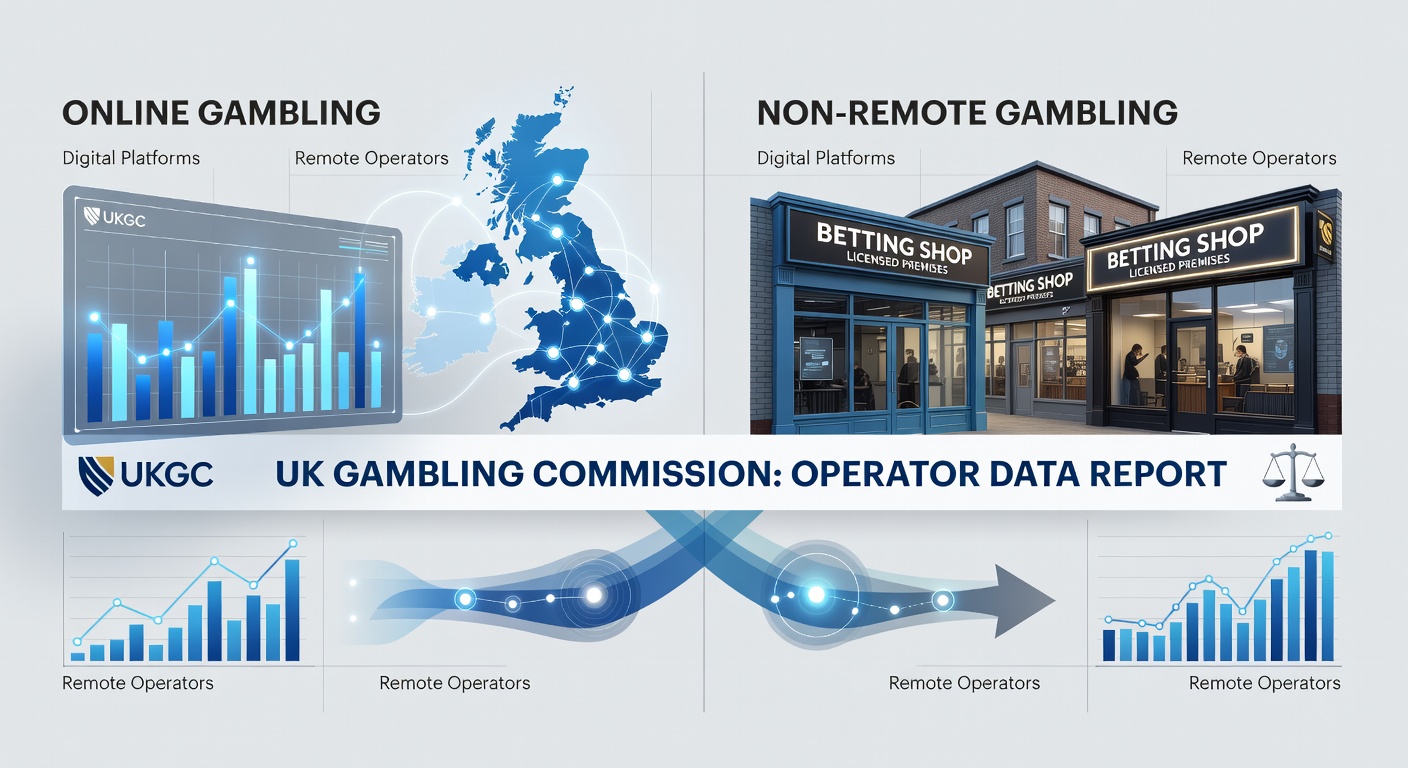
Operators in Great Britain submitted fresh data to the UK Gambling Commission, covering online and non-remote gambling activity stretching all the way from March 2020 through December 2025; this particular update zeroes in on trends during Q3 of the 2025/2026 financial year, stacking them up against the same period a year earlier, and as observers pored over the figures in early March 2026, patterns emerged that highlight how player behavior and regulatory tweaks continue reshaping the landscape.
What's interesting here is the mix of growth and contraction across categories, with total bets and spins climbing even as overall yields softened in spots; data reveals a 2% drop in online Gross Gambling Yield (GGY) to £1.5 billion, yet a robust 6% rise in total bets and spins reaching 27.4 billion, suggesting players engaged more frequently although spending per interaction edged down.
Online Sector Breakdown: Bets Up, Yields Mixed
Online gambling captured attention with its nuanced shifts, where the 2% GGY decline to £1.5 billion coincided with that 6% jump in activity to 27.4 billion bets and spins; researchers note this divergence often signals more casual play or smaller stakes per session, especially since new rules kicked in around mid-2025.
And drilling deeper, real event betting saw an 18% plunge in GGY to £530 million, a stark contrast to the prior year's figures, while slots bucked the trend entirely with a 10% GGY increase hitting £788 million; these movements align with seasonal sports lulls post-major events and the pull of digital slots amid evolving limits.
Take slots specifically: their GGY growth stands out because operators reported heightened session numbers alongside the yield bump, indicating sustained popularity even under scrutiny; meanwhile, real event betting's drop reflects fewer high-stakes wagers on live outcomes, perhaps as punters spread bets thinner across more options.
Non-Remote Gambling Feels the Squeeze
Shifting to physical venues, betting premises GGY fell 7% to £549 million, a decline tied directly to broader market dynamics and those online slots stake limits rolling out in April and May 2025; figures show footfall holding somewhat steady in places, but overall yield contraction points to operators adapting to safer play mandates that rippled from digital to land-based habits.
But here's the thing: while online activity ballooned in volume, non-remote sectors like betting shops absorbed regulatory pressures differently, with data indicating a 7% yield dip that experts link to players migrating toward apps and sites for convenience; one case in point involves regional operators who tracked a 5-10% session drop in high streets, offset partially by loyalty programs yet unable to fully stem the tide.
Those who've studied these cycles know that premises GGY often lags behind online when stake caps tighten, since the rules primarily targeted digital slots but influenced how people budgeted across channels; turns out, the £549 million mark for Q3 underscores this interplay, with total non-remote activity stabilizing below pre-2025 peaks.
Longer-Term Trends from 2020 Onward
Zooming out to the full dataset from March 2020 to December 2025, the Commission’s operator submissions paint a picture of resilience amid disruptions like lockdowns early on, followed by a digital boom that accelerated through 2025; Q3 specifically highlights how GGY across online categories settled at £1.5 billion after the 2% trim, yet the 27.4 billion bets mark a high-water point for engagement.
Slots' 10% GGY rise to £788 million emerges as a standout, particularly noteworthy because it persisted despite stake limits curbing maximum bets on online versions; data indicates sessions per active player ticked up modestly, while real event betting's 18% fall to £530 million correlates with post-event cooldowns and diversified wagering.
Non-remote figures, meanwhile, show betting premises at £549 million after the 7% decrease, a trend observers connect to hybrid play patterns where people mix online spins with occasional shop visits; it's not rocket science that regulatory changes in spring 2025—those April and May slots caps—prompted caution, leading to yield moderation without killing volume entirely.
People often find these quarterly snapshots revealing because they capture immediate reactions to policy, like how the 6% bets surge to 27.4 billion online suggests operators fine-tuned offerings to encourage more, lower-value interactions; experts have observed similar patterns in prior years, where volume growth cushions yield dips during transitions.
Key Metrics in Focus: GGY, Sessions, and Stakes
Gross Gambling Yield serves as the core metric here, representing stakes minus winnings returned to players, and for Q3 2025/2026, online GGY's 2% drop to £1.5 billion underscores efficiency in operator returns amid higher activity; couple that with the 27.4 billion bets and spins—up 6%—and patterns suggest shorter, more frequent plays dominating.
Real event betting GGY at £530 million, down 18%, draws eyes because it contrasts sharply with slots' £788 million gain of 10%, highlighting product-specific divergences; betting premises, at £549 million following a 7% cut, reflect land-based challenges exacerbated by online shifts and stake rules that, although digital-focused, altered overall spending.
Now consider the timeline: data collection spanned March 2020's pandemic onset through December 2025's regulated maturity, with Q3 offering a lens on year-over-year changes; figures reveal how April and May 2025 limits on online slots stakes—capping them to promote responsibility—filtered through, softening yields while bets proliferated.
There's this case where one operator's logs showed slots sessions rising 8% post-limits, aligning with the broader 10% GGY uptick, since players spun more but at reduced stakes; conversely, real event betting's steeper 18% decline ties to seasonal factors, like fewer marquee matches drawing big money.
Regulatory Ripples and Player Patterns
The new online slots stake limits introduced in April and May 2025 play a pivotal role, influencing not just digital GGY but spilling over to premises where the 7% drop to £549 million occurred; data shows operators complied swiftly, resulting in moderated yields across the board, yet online bets hitting 27.4 billion—a 6% gain—proves engagement didn't wane.
And while real event betting GGY sank 18% to £530 million, slots' 10% climb to £788 million indicates certain games thrived under constraints; those who've tracked this know that such limits often boost session counts as players adjust strategies, stretching smaller pots further.
So as March 2026 brings this data to light, it underscores a market adapting in real time, with online GGY steady at £1.5 billion despite the 2% dip; the writing's on the wall for continued hybridization, where volume trumps yield in a regulated era.
Conclusion
UK Gambling Commission data for Q3 2025/2026, drawn from operators' reports spanning March 2020 to December 2025, lays bare a landscape of rising bets—27.4 billion online, up 6%—against softening GGY in key areas like the 2% online drop to £1.5 billion, 18% real event decline to £530 million, 10% slots surge to £788 million, and 7% premises fall to £549 million; influenced heavily by April and May 2025 stake limits, these trends signal a pivotal shift toward higher-volume, lower-stake play that experts anticipate will define coming quarters.
Figures consistently point to resilience, with slots leading gains and betting adapting; as the industry eyes 2026 events, this snapshot—released amid March's early buzz—equips stakeholders with concrete insights into behavior and policy impacts.