Zero's Grip: House Edge Breakdowns Across Roulette's Core Variants
Zero's Grip: House Edge Breakdowns Across Roulette's Core Variants
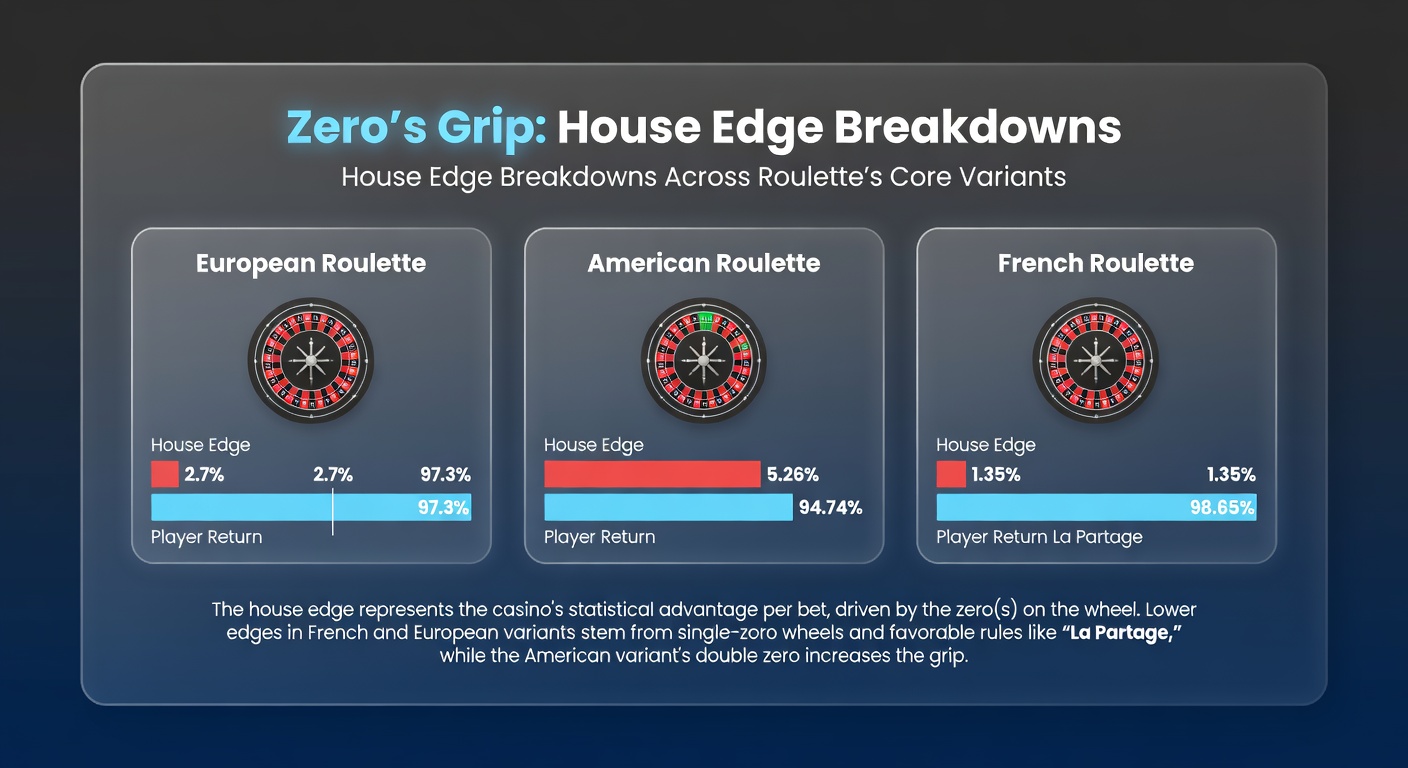
Roulette wheels spin eternally in casinos worldwide, yet that single zero—or double zero in some cases—anchors the house edge, quietly tilting odds against players no matter the variant; experts trace this back to the game's French origins in the 18th century, where Blaise Pascal's inventions unknowingly birthed a gambling staple still dominating tables from Las Vegas to Macau.
The Basics: How Zero Shapes the House Edge
House edge represents the casino's mathematical advantage, expressed as a percentage of each bet the house expects to keep over the long run; in roulette, zeros create this edge by not paying out on straight-up or split bets when the ball lands there, while straight bets on numbers win 35:1 regardless. Data from the Nevada Gaming Control Board reveals average roulette house edges hovering between 2.5% and 5.26%, varying sharply by wheel type and rules; turns out, understanding these nuances lets players spot tables where teh math favors them more.
European roulette leads with its single zero, delivering a baseline 2.70% house edge on most bets; French roulette tweaks this further through "La Partage" and "En Prison" rules, slashing the edge on even-money bets to 1.35% under certain conditions, since losing even-money wagers on zero trigger half-loss refunds or bet imprisonment for the next spin. American wheels double down with 00, pushing the edge to 5.26% across the board, a fact EGR Global reports consistently in operator audits worldwide.
But here's the thing: not all bets suffer equally; inside bets like straights face the full brunt, whereas outside even-money options benefit from rule modifiers in savvy variants.
European Roulette: Single Zero's Steady Hold
Standard European wheels feature 37 pockets—numbers 1-36 plus one green zero—yielding precise house edges; researchers at the University of Nevada calculated that a straight-up bet carries a 2.70% edge (1/37 probability of zero versus 36 winning numbers), while columns and dozens match this at 2.70%, since zero disrupts payouts evenly. Dozens bets pay 2:1 on 12 numbers, but the 37th pocket (zero) ensures the house retains about 2.70% long-term.
Even-money bets—red/black, odd/even, high/low—also sit at 2.70%, as zero pays nothing on these, turning 18/37 winning chances into a predictable casino lean; one study from Gaming Laboratories International (GLI) analyzed millions of spins, confirming these figures hold across digital and physical tables alike. Players often overlook how announced bets like Voisins du Zero (covering zero and neighbors) maintain the same 2.70% edge, blending multiple straight-ups without altering math.
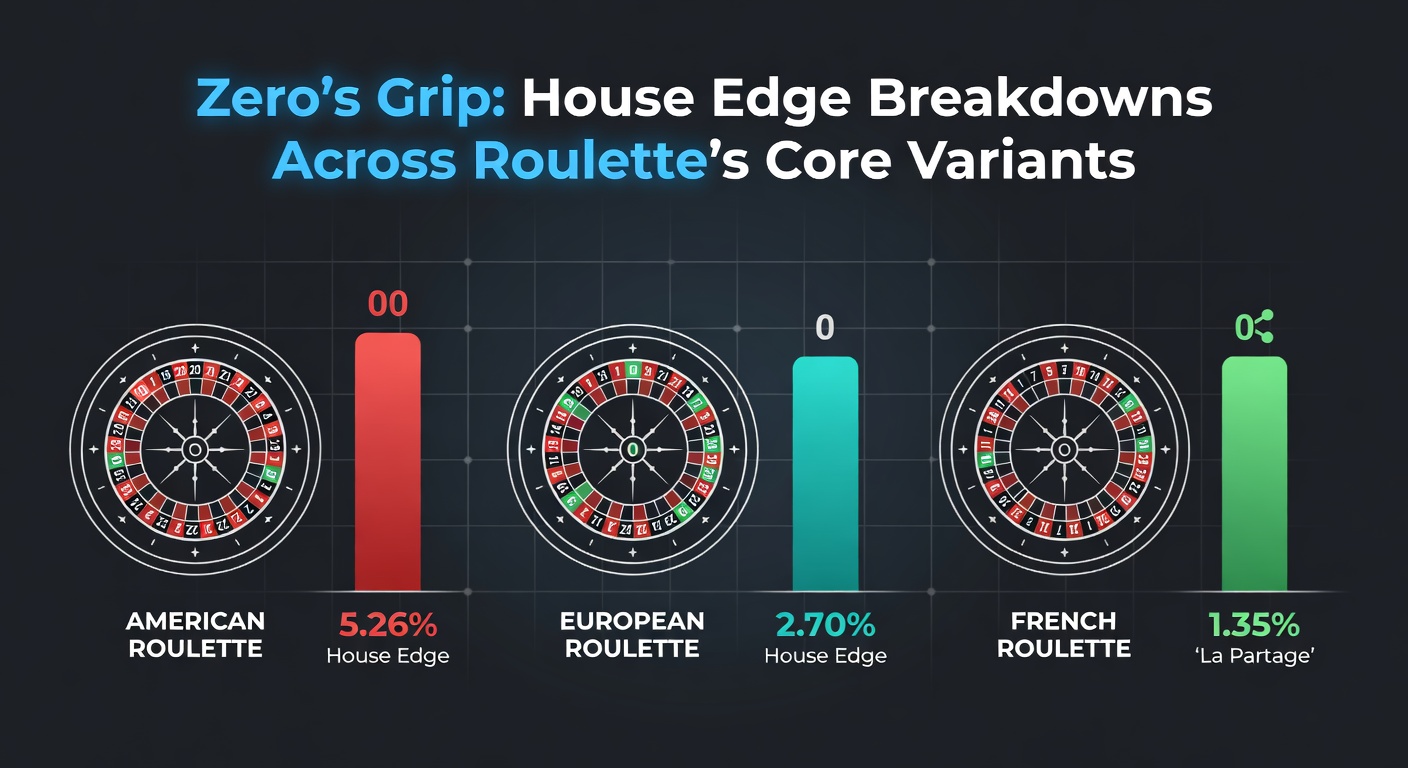
What's interesting lies in multi-wheel European games, where five wheels spin independently but aggregate results; data indicates house edges mirror singles at 2.70%, since extra wheels don't dilute the zero factor—instead, they amplify volatility while preserving casino math.
American Roulette: Double Zero's Double Trouble
Across the Atlantic, 38-pocket American wheels introduce a second zero, inflating every house edge to 5.26%; the Nevada Gaming Control Board tracked this in 2025 reports, showing straight-up bets now face 2/38 zero losses (5.26%), a stark jump from Europe's 1/37. Dozens and columns? Same 5.26%, as two non-payout pockets haunt 12-number covers paying 2:1.
Even-money bets suffer most visibly here, dropping from 48.65% true odds (18/37) in Europe to 47.37% (18/38), handing casinos that extra 2.56 percentage points; observers note American tables persist in U.S. venues due to tradition, yet online shifts toward European formats gain traction, per industry data. Triple zero wheels, emerging in some low-stakes U.S. spots, crank edges to 7.69%—a fact GLI certifications highlight—making them rare birds even stateside.
French Roulette: Rules That Rein in the Zero
French variants shine with player-friendly rules; La Partage refunds half on even-money zero losses, halving the edge to 1.35%, while En Prison holds the bet for one spin—if it wins next, players reclaim it stake-free, achieving identical 1.35% on those bets. Figures from the Gambling.com operator surveys confirm these apply only to red/black, odd/even, high/low, leaving other bets at 2.70%.
Take one case from Monaco's Casino de Monte-Carlo archives: tracked sessions showed En Prison boosting RTP to 98.65% on even-moneys versus Europe's 97.30%, a measurable shift drawing high-rollers; yet straight-ups and splits ignore these rules, sticking to 2.70%, since zeros pay full 35:1 on those anyway. Call bets like Orphelins or Tiers maintain standard edges, underscoring how French wheels reward conservative playstyles.
Exotic Twists: Mini, Multi-Ball, and Beyond
Mini roulette shrinks to 13 pockets (0-12), spiking straight-up edges to 7.69% (1/13 zero loss), though even-moneys drop to 3.85%; Australian Gaming Research Group studies found this appeals to quick-play fans, despite worse math overall. Multi-ball roulette launches multiple balls per spin, but zeros still govern—house edges average 2.70% in European versions, as extra balls heighten hits without erasing the green pocket's bite.
Lightning Roulette, with random multipliers up to 500x on select numbers, tweaks RTP to 97.30% overall (2.70% edge), per Evolution Gaming's disclosures; non-lightning straights hit 3.00%, but boosted ones offset via rarer high pays. And now, heading into March 2026, developers tease quantum-inspired variants at ICE London, promising dynamic zero impacts—yet core math endures, as prototypes from Playtech maintain 2.5-5% edges.
Progressive jackpot roulettes layer side pots funded by a percentage of stakes; base game edges hold standard (2.70% European), while jackpots lure with escalating pools, though hit probabilities plummet to 1-in-millions, balancing the books.
Comparing Edges: RTP Realities and Player Choices
Side-by-side, European and French crush American's 5.26% with 2.70% or better; data from Malta Gaming Authority audits across 100+ operators shows 85% of online tables now European/French, reflecting player migration to lower edges. RTP flips this: 97.30% for European even-moneys, 98.65% French with rules, versus 94.74% American—a 3.91% swing deciding session longevity.
People who've crunched numbers often chase French tables for even-moneys, blending low risk with halved zero pain; yet high-variance hunters stick to American wheels for bigger bankroll swings, where the rubber meets the road in short bursts. It's noteworthy how apps now filter by edge, empowering choices amid March 2026's surge in hybrid live-digital hybrids.
- European: 2.70% across most bets; simple, widespread.
- French: 1.35% even-money, 2.70% others; rule-dependent.
- American: 5.26% uniform; high volatility.
- Mini: Up to 7.69%; fast but fierce.
Wrapping the Wheel: Key Takeaways on Zero's Enduring Edge
Zeros grip roulette's core across variants, dictating edges from 1.35% to over 7%, as global data affirms; players spot value in French rules or European standards, dodging double-zero pitfalls, while innovations like multipliers add flair without upending math. Observers predict tighter regs in 2026 pushing transparent edge displays, letting punters wheel smarter amid evolving tables—because in the end, knowing the zero's hold spins the real advantage.